
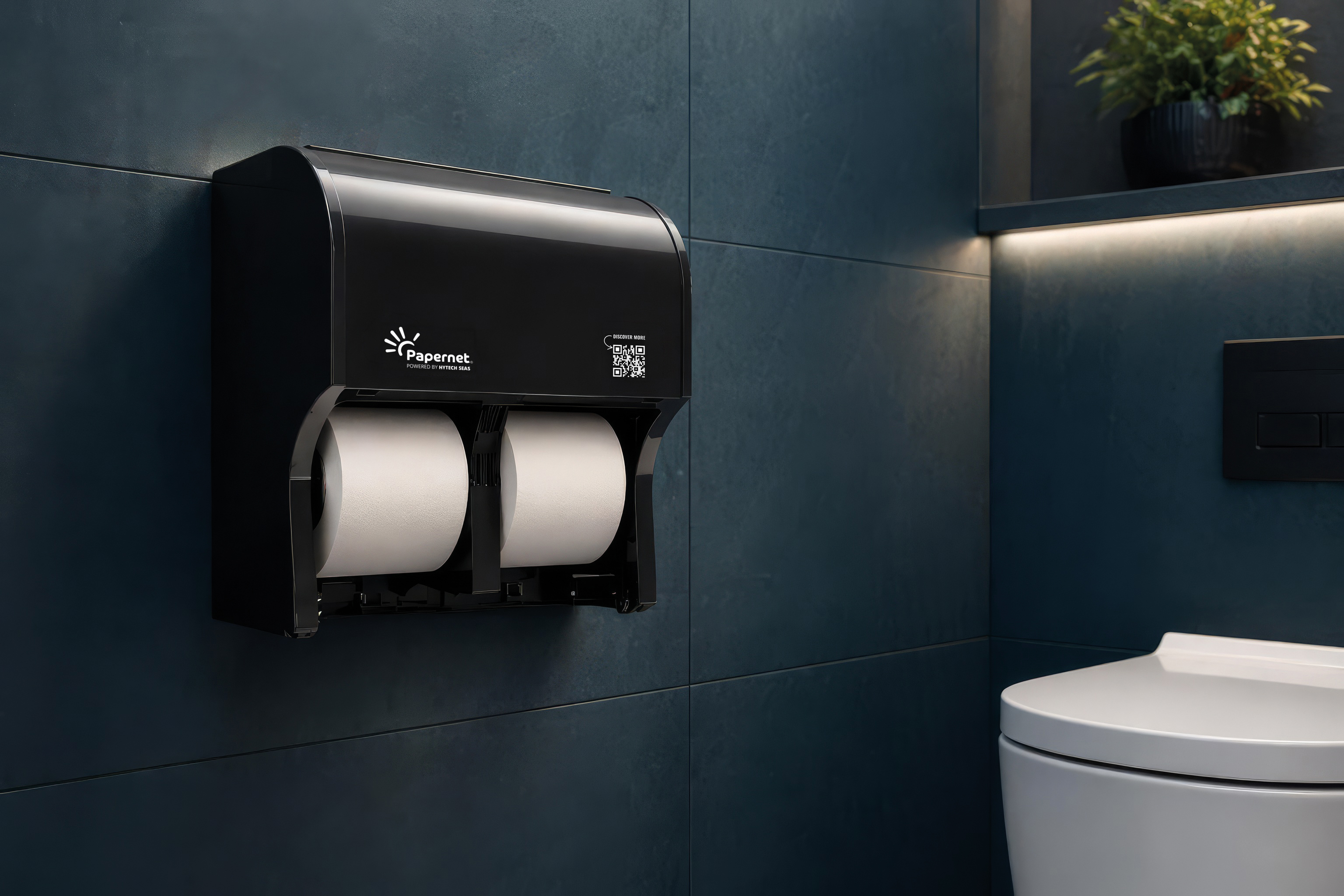
1. Start With a Restroom Usage Assessment
Before changing products or maintenance procedures, it is useful to understand how restrooms are being used. Facility managers should identify the busiest restrooms on campus, peak periods of use, areas with frequent supply shortages, locations experiencing recurring plumbing problems, and the average time required for cleaning and replenishment.
This information can reveal where operational improvements are most needed. For example, a restroom near a cafeteria may have very different usage patterns from one located in an administrative building. A single maintenance schedule may not be equally effective for both.
2. Choose Paper Products for High-Traffic Environments
Paper selection can influence restroom efficiency in several ways. For toilet paper, factors such as comfort, strength, and disintegration are important. For paper towels, absorbency, durability, dispensing format, and refill capacity should be considered.
In high-traffic educational environments, the objective is to identify products that perform consistently while supporting efficient consumption and maintenance. A product’s total cost of use may provide a more useful comparison than its purchase price alone.
3. Reduce the Risk of Plumbing Disruptions
Toilet blockages are a recurring concern in many educational facilities. They may result from excessive paper use, inappropriate materials, or underlying plumbing conditions.
A preventive approach can include regular inspections, clear disposal guidance, and toilet paper designed to break apart efficiently after flushing. Papernet Dissolve Tech® offers a paper technology developed for rapid disintegration in water, helping address the risk of paper-related blockages.
For schools and universities, selecting appropriate paper products can be one part of a broader restroom maintenance strategy.
4. Optimize Refill and Cleaning Routines
Not every restroom requires the same level of attention. Instead of applying identical maintenance intervals across an entire campus, facility managers can prioritize service based on actual usage patterns.
High-traffic restrooms may need more frequent checks, while lower-traffic spaces can follow a different schedule. The right dispenser format and product capacity can also help teams plan replenishment more efficiently.
Over time, better alignment between traffic patterns and maintenance schedules can reduce unnecessary work and improve supply availability.
5. Evaluate the Total Cost of Restroom Maintenance
Restroom expenses extend beyond paper purchasing. A complete cost assessment should consider paper product consumption, dispenser refilling and servicing, routine cleaning labor, plumbing maintenance and repairs, emergency interventions, and operational disruption when restrooms are unavailable.
A product that costs less per case may not necessarily provide the lowest total operating cost. Evaluating these factors together allows schools to make more informed purchasing decisions.
6. Support a Better Experience for Students and Staff
Restroom performance also affects the people who use the facilities. Reliable supplies, clean surfaces, functional plumbing, and accessible dispensers contribute to a more comfortable and dependable environment.
While these improvements may seem small, they are part of creating a school environment that works better for students, staff, and visitors.